


Things to Know while buying land in Uganda
Things to Know while buying land in Uganda
prior to purchase. Land is not a vegetable that is purchased from an unknown seller by the side of the road.
In light of the many ongoing fraud instances, the learned justice’s aforementioned statement essentially made the case for due diligence as a condition before purchasing land. To put it simply, create a plan to safely purchase land and another to safeguard the land you have already purchased. Every precaution must be made to identify and prevent fraud and illegalities.
Therefore, the following factors should be taken into account while purchasing land in Uganda:
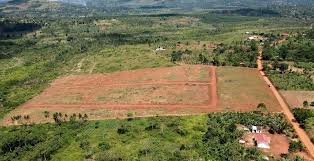
Have the land surveyed by certified surveyors. As part of due diligence, surveyors must determine the property’s exact size and boundaries. They allow you to verify that the land’s physical measurements match those shown on the certificate of title.
Section 59 of the Registration of Titles Act [4] states that a certificate of title is conclusive proof of ownership of property reflected in the title and shall not be impeached save in circumstances of fraud as outlined in section 64(1) of the same Act. Therefore, it is important to always establish ownership of land before purchasing. Thus, in order to determine whose names, the land he or she plans to purchase is in, a potential buyer must perform a title search at the land registration and the search can be done through though entities such as Kampala Real Estates.
Regarding Kibanja property holding on Mailo property, ownership is proven by either an evidence of succession to Kibanja holding in line with applicable customary procedures or a proof of approval from the landlord or Mailo owner for the occupation of his or her land. Referring to the case of Jennifer Nsubuga Versus Michael Mukundane and Anor (above), the
Additionally, a certificate of customary ownership can be produced as proof of ownership for land that is traditionally owned by an individual, family, or community.
It is advisable to avoid dealing in matrimonial property without a spouse’s consent, as this will render the entire transaction void ab-nitio (from the beginning) in accordance with Section 39 of the Land (Amendment) Act. If you are dealing in matrimonial property or family property, make sure you get the consent of either spouse. This consent must be obtained after the spouse has received independent advice from a third party who isn’t a party to the transaction.
Furthermore, Section 180 of the Succession Act[5] states that the executor or administrator, as applicable, of a deceased person is the person’s legal representative for all purposes and that all of the deceased person’s property belongs to him or her as such. Therefore, it is crucial to confirm the legitimacy of the letters of administration or probate that you will be shown. Verifying the court records of the court that issued the letters of administration and probate is one way to accomplish this.
Furthermore, every beneficiary of an estate must agree to any transactions involving the estate in accordance with the Succession (Amendment) Act[6]. This is meant to discourage the practice of those in possession of letters of administration or probate selling off portions of the estate without first contacting the estate’s beneficiaries.
Don’t pay with cash. Pay at the bank and save the bank deposit slip to improve the paper trail. Copies of the bank slips or electronically generated payment slips can be readily presented in court as evidence of payment in the event that disagreements emerge over the transaction.
Sign a clear land selling contract. Execute a new land sale agreement for each piece of land you purchase. Don’t simply copy and paste the land sale contract you signed while purchasing another piece of property. The details of each land transaction vary based on the tenure of the property being purchased. Hire a lawyer to create a suitable land sale contract for you. You can videotape the entire activity while you sign the land selling agreement. Try to transfer the land title into your names as soon as possible after signing the land sale agreement.
Therefore, before buying any land, hire a registered surveyor s through entities such as Kampala Real Estate, verify ownership by searching the land registry, get approval from the other spouse and beneficiaries if you are buying family land, matrimonial property, or estate property, and most importantly, sign a clear land sale agreement that has been prepared by a lawyer. Include experts in every stage of the due diligence process.